Are you frustrated with stubborn grease, oil splatters, and food stains that just won’t budge from your kitchen surfaces? Finding a stain remover liquid that truly works can feel like searching for a needle in a haystack.
Not all cleaners are created equal. A quality stain remover must break down oils and residues without damaging surfaces, and it should be safe for daily use in busy Indian kitchens. Factors like the type of stain, surface material, and water hardness all play a role in how effective a cleaner will be.
According to a study by the Indian Council of Medical Research, “over 60% of Indian households struggle with kitchen hygiene due to ineffective cleaning products, leading to bacterial contamination on cooking surfaces”
In this blog, we will show that Klinol’s advanced formula outperforms regular cleaners, how to use our products for maximum effectiveness, and why thousands of Indian families trust Klinol for their cleaning needs.
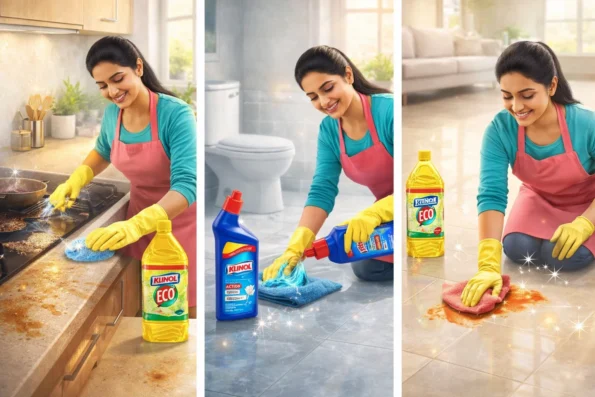
Kitchen Bathroom And Floor Surfaces
Understanding Different Types of Household Stains
Not all stains are created equal. Understanding stains helps you choose the right cleaner for maximum effectiveness during daily house cleaning routines.
1. Protein-Based Stains
These food stains require enzymatic surfactants that break down protein molecules at the source:
- Dairy spills – Milk, curd, and paneer residue on kitchen countertops
- Egg residue – Cooked egg proteins that bond strongly when heated
- Meat juices – Chicken, mutton drippings that regular washing liquid can’t remove
- Lentil spills – Dal and legume stains requiring enzymatic action
2. Oil-Based Stains
These grease stains need powerful degreaser formulas with concentrated formula technology:
- Cooking oil – Refined oil, sunflower oil penetrating ceramic tiles and grout
- Ghee splatters – Clarified butter marks on kitchen countertops and walls requiring effective kitchen cleaner.
- Butter smears – Fat-based stains that utensils washing liquid handles on cookware
- Coconut oil – Heavy oil stains that Klinol’s multi-surface cleaner emulsifies even in hard water
3. Tannin Stains
These stubborn pigment-based stains require specialized tiles cleaning liquid with chelating agents:
- Tea marks – Dark tannin stains on cups and kitchen countertops
- Coffee rings – Set-in stains needing biodegradable compounds for effective house cleaning
- Turmeric – Yellow pigment food stains that penetrate surfaces deeply
- Red chili – Capsaicin-based stains that kitchen floor cleaner tackles on spill areas without harsh chemicals
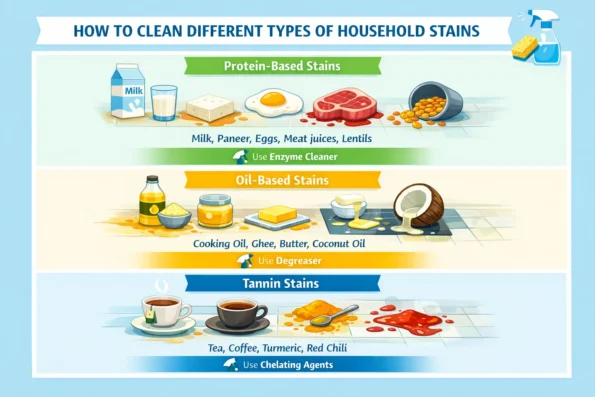
Household Stain Solutions
Why Indian Homes Face Persistent Stains
If you’ve ever scrubbed your kitchen or bathroom only to see stains stick around, you’re not alone. Many cleaning tips just don’t work in Indian homes—and it’s not your fault. One major reason is hard water. In many areas, water is full of minerals. When this meets regular soap, it creates a sticky layer called scum that locks stains in place instead of removing them.
1. The Challenge with Regular Cleaners
Most everyday cleaning liquids aren’t made for these conditions. They struggle to remove oil, food spills, and dirt when hard water is involved. That’s why stains often seem impossible to get rid of, leaving your surfaces looking dull and dirty.
2. How Specialized Stain Removers Help
This is where Klinol Multipurpose Liquid Combo comes in. Designed for Indian households, it tackles stains effectively by:
- Neutralizing minerals in water that interfere with cleaning.
- Breaking chemical bonds that keep dirt and grease stuck.
- Lifting grime from tough surfaces, even in tricky spots like kitchen countertops and bathroom tiles.
- With the right formula, even stubborn stains from oil, food, or daily spills can be removed with less effort. Using a product like Klinol not only saves time but also keeps your home sparkling clean and hygienic.
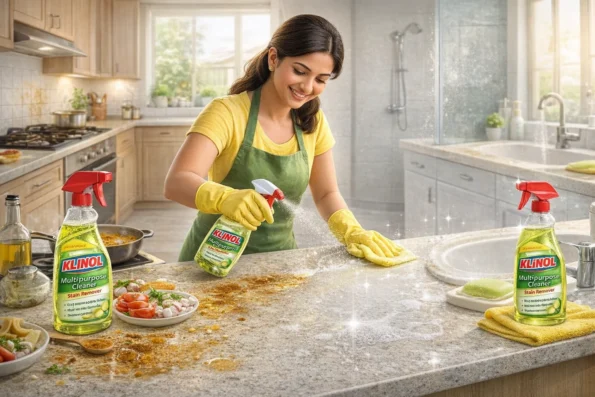
Different Kinds Of Stains
Different Kinds of Stains and How to Tackle Them
Professional stain remover liquids are your best defense against the unique environmental challenges found in Indian homes. Here is how you can use Klinol to restore your surfaces:
1. Grease Spots & Oil Stains
Indian cooking often leaves behind a sticky, colorful film that resists ordinary cleaning attempts.
- The Problem: Turmeric and mustard oil create stubborn yellow stains that standard liquids can’t budge.
- The Solution: Switch to Kitchen Surface Cleaner for its superior grease-cutting action.
- The Result: It instantly breaks down heavy fats and oil stains, leaving your countertops smooth and streak-free.
2. Hard Water & Limescale
Hard water minerals can quickly turn a beautiful bathroom into a dull, chalky mess.
- The Problem: Calcium and magnesium deposits in ceramic tiles, creating rough textures and unsightly white marks.
- The Solution: Use the high-performance tile cleaner liquid found in Klinol’s Toilet Cleaner Liquid Combo.
- The Result: The formula dissolves mineral scale on contact, reviving the original shine of your tiles without damage.
3. Fabric & Collar Stains
Everyday wear traps sweat and body oils in the fibers of your clothes, leading to permanent discoloration.
- The Problem: Grime builds up on cuffs and collars, making clothes look aged and dirty.
- The Solution: Apply a washing liquid with a concentrated formula directly as a powerful pre-wash treatment.
- The Result: Our stain remover liquid tech lifts the deepest grime from the fibers, ensuring your whites stay bright and colors stay vibrant.
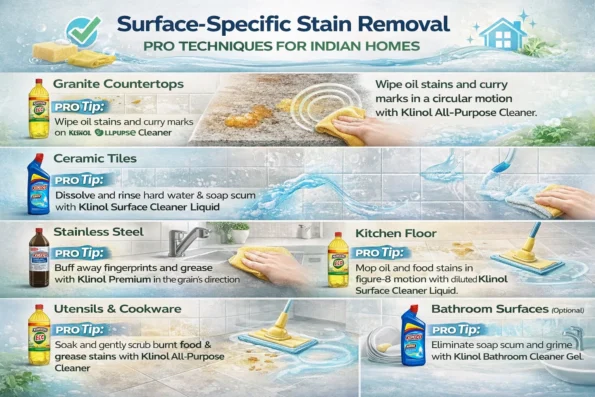
Surface Specific Stain Removal Techniques
Surface-Specific Stain Removal Techniques
Different surfaces in your home attract different types of stains. Using the right cleaner and technique not only removes dirt effectively but also protects your surfaces from damage. The table below shows common stains for each surface, the recommended Klinol solution, and pro tips to get the best results every time.
| Surface | Common Stains | Klinol Solution | Pro Technique |
| Granite Countertops | Oil stains, curry marks | All-Purpose Cleaner | Spray, wait 2 min, wipe circular motion |
| Ceramic Tiles | Hard water, soap scum | Surface Cleaner Liquid | Apply, let penetrate grout, rinse thoroughly |
| Stainless Steel | Fingerprints, grease stains | All-Purpose Cleaner | Wipe with grain, buff with dry cloth |
| Kitchen Floor | Oil stains, food stains | Surface Cleaner Liquid | Dilute 1:10, mop in figure-8 pattern |
| Utensils & Cookware | Burnt food, grease stains | All-Purpose Cleaner | Soak 5 min, gentle scrub, rinse clean |
Conclusion
High-performance stain remover liquids utilize advanced surfactants to break the molecular bond between grime and surfaces, especially in hard water environments. For maximum efficiency, allow the liquid to dwell for 3-5 minutes to emulsify tough grease and minerals before wiping for a streak-free, sanitized finish. Remember, the key to a healthy home is consistent surface sanitizing using products that are both powerful and biodegradable.
Ready to transform your cleaning routine? Explore the full range of professional solutions at Klinol India and find the perfect combo packs for your home today.
Frequently Asked Questions
1. Can I use a stain remover liquid on all types of flooring?
Most high-quality liquids are safe for ceramic and vitrified tiles, but always check if they are suitable for natural stone like marble. For best results, use a floor cleaner concentrate diluted according to the manufacturer’s instructions.
2. Is a kitchen cleaner different from a regular floor cleaner?
Yes, a kitchen cleaner is typically formulated as a degreaser to break down organic oils. While a kitchen floor cleaner handles general dirt, a multi-surface kitchen spray is designed to be antibacterial and safe for food prep areas.
3. Why should I choose a concentrated formula over a regular liquid?
A concentrated formula is more cost-effective and eco-friendly. It allows you to customize the strength of your stain remover liquid based on whether you are doing a daily wipe-down or a heavy-duty deep cleaning.
4. How long should I leave the liquid on a tough stain?
For stubborn grease or hard water marks, let the liquid sit for 3 to 5 minutes. This allows the surfactants to penetrate the grime, making it much easier to wipe away without excessive scrubbing